
Reviewed · THE USA
Amish Experience Visit-In-Person Tour
The most unusual part of this Lancaster tour is the private home visit. You sit in an Amish family’s kitchen or on the back deck, talk without phones or televisions getting in the way, and learn about daily life directly from the people who live it. The farm and small business visits add useful context instead of leaving the Amish experience at the level of a roadside photo stop.
I like two things especially: the small group, capped at 14 people, and the range of stops. You see dairy farming, watch a craft demonstration, then have time for an unhurried conversation. The main consideration is that this is a respectful cultural visit, not a show. You must dress appropriately, leave your camera away from the hosts, and accept that the exact farm or craft business may vary.
Key points to know before booking
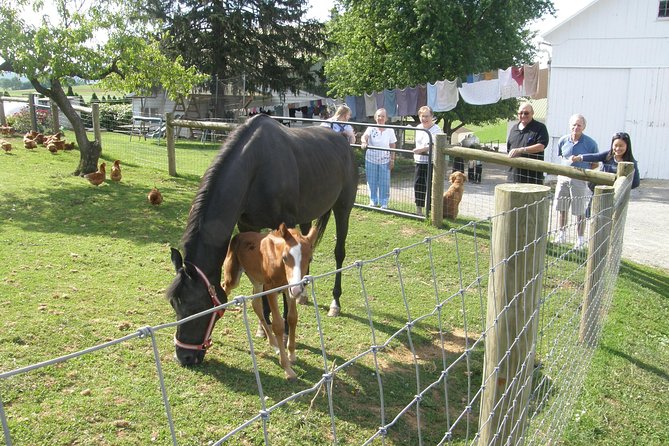
- Three very different stops: Visit a working Amish farm, a small home-based business, and a family home.
- The home conversation is the centerpiece: Time is set aside for informal questions and conversation with an Amish couple or family.
- Small-group format: A 14-passenger minibus keeps the outing personal and handles the rural driving for you.
- Strong guide component: Guides including Jim, Beth, Kent, Joe, and Jack are praised for clear explanations and long-standing connections with local families.
- Good value at $58.95: The price includes the guide and transport for roughly three hours, but not food or drinks.
- Important etiquette: No photographs of Amish hosts, respectful clothing, no pets, and no children under six.
Why this tour feels different from a bus ride through Amish Country
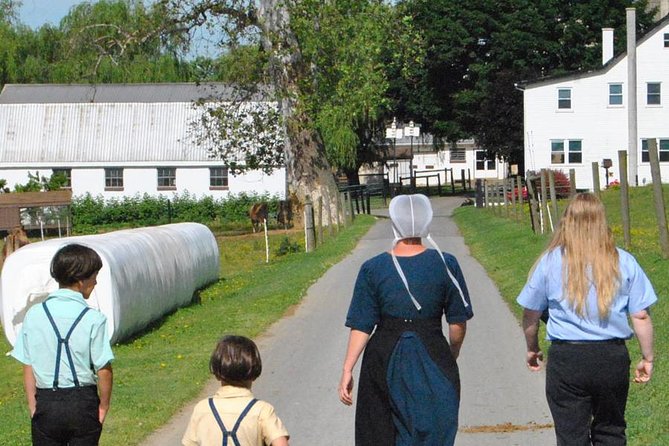
Lancaster County has plenty of ways to see Amish farms. You can drive country roads, stop at farm stands, or join a large coach tour. Those options can be worthwhile, but they often leave you looking at the Amish from the outside.
This experience takes you farther into the human side of the community. You are not simply told that Amish families farm, make goods, and live without modern entertainment. You visit people connected to those activities and have a chance to ask how their work and home life fit together.
That difference matters. The Amish community is not one uniform block of people following an identical script. Farm size, business type, household routines, and personal views can differ. Meeting more than one family gives you a fuller picture than a single presentation can.
The tour lasts about three hours. That is long enough for several visits but short enough to fit into a busy Lancaster schedule. Transportation between the stops is included, so you do not need to find several farms or try to follow unfamiliar back roads in your own car.
The tour begins at the Amish Experience, at 3121 Old Philadelphia Pike in Bird in Hand. Check in at the theater box office in the east parking lot at least 15 minutes before departure. The trip ends back at the same meeting point.
Other trips travellers line up across the USA on the same visit:
- NYC: SUMMIT One Vanderbilt Tickets
★ 4.7 · 51,195 reviews - NYC: 9/11 Memorial & Museum Timed-Entry Ticket
★ 4.8 · 31,428 reviews - NYC: Empire State Building Tickets – Observatory & Museum
★ 4.7 · 25,757 reviews
The dairy farm: seeing work behind the food
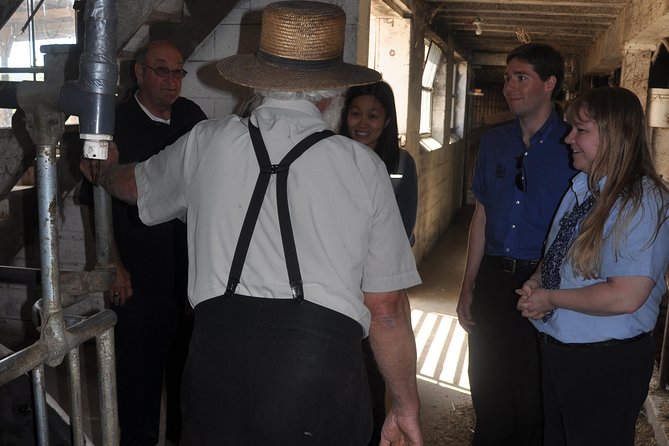
The first stop is an Amish farm, usually beginning in the barn. You learn how milking works and see the equipment used in a modern dairy operation.
One useful correction to a common assumption is that Amish farmers do not necessarily milk cows by hand. The farm may use milking machines, along with a bulk tank that keeps the milk cold. The power source is referred to as Amish electricity, an example of how Amish families may use practical technology while placing limits on other forms of modern life.
This stop helps you avoid a too-simple picture of the Amish as people who reject every machine. Their choices are tied to community rules, religious values, and the purpose of the tool. A milking system that supports farm work is one thing. A device that changes family or community life may be treated differently.
You may also see other parts of farm life, depending on the host farm and the day. The point is not to rush through a barn for a quick photograph. Your guide explains what you are seeing and gives you a chance to ask questions.
I find this opening stop useful because it establishes work as a central part of the visit. You see a real agricultural operation, not a staged room dressed up as one. The drawback is that farm activity can vary. If a particular piece of equipment or task is not happening during your visit, the guide may focus on other aspects of the farm.
The cottage business: Amish work beyond the fields
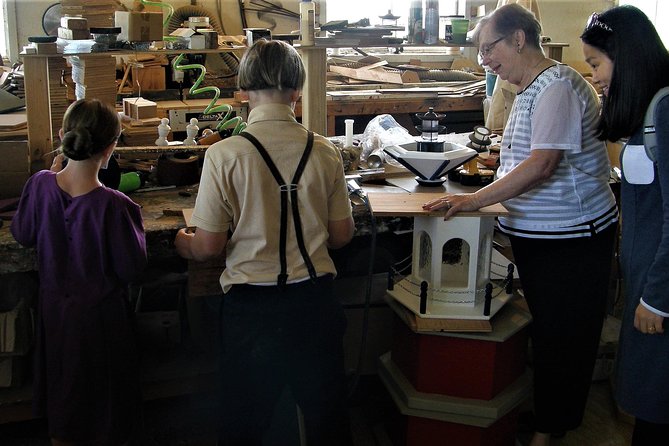
Farmland is expensive and limited in Lancaster County, so many Amish families operate small businesses from home or nearby workshops. These enterprises can include furniture, gazebos, farm equipment, quilts, leather goods, baskets, greenhouses, harnesses, and carriages.
The exact business is not fixed. You might visit a harness or carriage maker, basket weaver, greenhouse, leather worker, or woodworker. An actual demonstration is normally part of this stop, which gives the visit a practical focus.
This is one of the strongest parts of the tour for anyone interested in craftsmanship or local economies. You can see how a family makes a living without leaving the community for a conventional office or factory. The business may also show how work and family life overlap in an Amish household.
The stop can be especially interesting after the farm visit. Farming is the image most people carry into Amish Country, but small businesses are an important part of how families support themselves. A leather shop or carriage workshop also lets you see skill passed through hands and tools rather than explained only in a lecture.
Guides such as Jim and Kent are often praised for explaining the people and businesses in a clear, friendly way. Beth is another guide frequently singled out for her strong understanding of the families visited. Guide assignments can change, so you should not book on the assumption that one particular person is guaranteed, but the experience depends heavily on the guide’s ability to connect each stop to the larger story.
You should also keep your expectations flexible. This is not a guaranteed shopping trip, and the description does not promise that you will visit a specific type of workshop. The strength is the personal access and demonstration, not a fixed product list.
The home visit: the quiet heart of the afternoon
The final stop takes you along rural back roads to a more distant farm. You enter an Amish home and sit down for conversation with the family.
This is the part that makes the tour worth choosing over a standard scenic drive. You are given time to talk informally, often sitting in a kitchen or on a back deck. The setting is simple, but the exchange can be memorable because it feels like a conversation rather than a performance.
You can ask about customs, traditions, family life, and everyday routines. The hosts answer directly, and your guide helps provide context when a question touches on a subject that needs more explanation. The visit also gives you a chance to notice the pace of the household. There are no televisions, iPhones, or computers shaping the conversation.
A number of guides have been praised for not rushing this stop. Jim is described as kind and careful with the timing, while Beth is noted for her warm relationships with the families she introduces. Jack is also praised for combining driving with useful explanations. These details matter because the home visit works best when the group has time to settle in and speak naturally.
You should treat this stop with humility. You are entering someone’s home, not a museum. Avoid photography, listen before asking a string of questions, and remember that the family is sharing personal time. The tour specifically asks you not to photograph the Amish hosts. Respectful clothing is required, and the tone should be modest and polite.
The home visit may be less exciting for someone who wants constant activity. There is no major attraction to check off here. You sit, talk, and listen. For me, that slower pace is the point, but it may not suit a child who needs frequent movement or a visitor who prefers sightseeing from a vehicle.
A different kind of day, same corner of the map:
- NYC: Empire State Building Observation Deck Tickets
★ 4.7 · 22,072 reviews - NYC: Edge Observation Deck Admission Ticket
★ 4.6 · 20,918 reviews - Grand Canyon West, Hoover Dam Stop and Optional Lunch and Skywalk
★ 5.0 · 19,535 reviews - New York City: Statue of Liberty & Ellis Island with Ferry
★ 4.6 · 18,683 reviews
What the guide adds to the experience
The guide is more than a driver. During the minibus rides, you get background about Amish history, beliefs, work, and community life. At each stop, the guide introduces the host and helps the conversation move along without taking it over.
Several guides are named in the experience’s feedback, including Jim, Beth, Kent, Joe, and Jack. Jim is often praised for his detailed explanations and friendly manner. Beth is valued for the trust she has built with Amish families. Kent is described as a strong storyteller, and Joe is credited with giving clear, accurate information. Jack is praised for being both a useful host and an informative driver.
Those connections are important. A home visit only works when the hosts feel comfortable with the guide and the group. The guide’s relationship with the families helps create a relaxed setting, but you still play a part. Ask thoughtful questions and give the hosts room to answer.
The guide also helps correct stereotypes. The Amish use some modern systems while limiting others. Farming can involve machinery. A home business can be financially active and well organized. A family may be hospitable and open in conversation while still following religious rules that differ from your own.
Why the 14-person limit matters
The group maximum is 14 people, and transportation is provided in a 14-passenger minibus. This is a real advantage in rural Lancaster.
A small group can enter a home without making the visit feel like a procession. You can hear the host, ask a question, and take part in the conversation. At a large farm attraction, you may spend much of your time trying to see over other people or waiting for a crowd to move.
The minibus also removes the hassle of driving from one location to another. You do not need to study a map, search for parking at private businesses, or worry about missing a turn on an unfamiliar back road. You can pay attention to the countryside and the guide’s explanations.
The tradeoff is that space is limited. You will spend part of the three-hour outing in a vehicle, and the ride is shared with the rest of the group. Most travelers can participate, but the tour does not allow children under six. Service animals are allowed, while pets are not.
Price, timing, and practical value
At $58.95 per person, this tour is not the cheapest way to see Amish Country. You can explore the area by car for less, especially if you are content with scenery and roadside stops.
The price makes better sense if you value access and interpretation. It covers a local guide, transport between locations, three separate visits, and admission to the experience. You are paying for the coordination as much as for the driving. Reaching a private farm, workshop, and family home on your own would not be simple, and an unplanned visit would not be appropriate.
The tour is also efficient. In about three hours, you see three parts of Amish life: agriculture, small business, and home life. Food and drinks are not included, so plan to eat before or after the outing.
If you can choose a 5 p.m. departure, it may work well as a gentle end to the day. The final home conversation gives the trip a calmer finish than another busy attraction would. Still, confirm the available departure time when booking, since the supplied tour information only identifies that 5 p.m. has been a popular choice, not that every departure runs then.
Free cancellation is available if you cancel at least 24 hours before the local start time. Changes or cancellations made inside that window are not accepted for a refund.
Who should book this experience
I would choose this tour for you if you want to meet Amish people directly, prefer conversation to staged entertainment, and value a guide who can explain cultural differences with care.
It is a strong fit for:
- Couples looking for a thoughtful Lancaster outing
- Families with children aged six and older
- Anyone interested in farming, crafts, or small businesses
- Visitors without a car
- People who want a small group rather than a large coach
- First-time visitors who want context before exploring the county alone
It may not be right for you if photography is central to your trip. You cannot photograph the Amish hosts, and the home visit depends on respectful conversation rather than visual collecting.
You should also choose something else if you want a fixed list of sights. The farm and cottage business can vary, so the precise craft demonstration is not guaranteed. The tour’s value comes from meeting local families and seeing how the stops fit together.
Should you book the Amish Experience Visit-In-Person Tour?
Yes, if you want a personal introduction to Amish life and are willing to slow down. The strongest combination is the small group, the three different settings, and the final home visit, where you can move beyond general facts and speak with an Amish family.
At $58.95, I consider it good value for a guided three-hour experience with transport and private access. Book it for the people and the conversation, not for photographs or a guaranteed workshop. Arrive early, dress respectfully, keep your camera packed away, and let the afternoon unfold at its own pace.
FAQ
How long does the Amish Experience Visit-In-Person Tour last?
The tour lasts approximately three hours.
Where does the tour begin and end?
It begins at the Amish Experience, 3121 Old Philadelphia Pike, Bird in Hand, Pennsylvania 17505. The tour ends back at the same meeting point.
What is included in the price?
The price includes a local guide and transportation between the tour locations. Admission is included. Food and drinks are not included.
How many people can join the tour?
The maximum group size is 14 travelers, and transportation is provided in a 14-passenger bus.
Are children and pets allowed?
Children under six are not allowed. Service animals are allowed, but pets are not.
Can I take photographs during the home visit?
You are asked not to photograph the Amish hosts. You should also dress respectfully during the tour.
Newly listed in the USA
- The Maui Butterfly Farm Tour★ 5.0 · 446 reviews
- NON BUS 4 Winery Traverse City Wine Tour on Old Mission Peninsula★ 5.0 · 445 reviews
- New England Aquarium Admission Ticket in Boston★ 4.0 · 446 reviews
- New Orleans City Tour and Steamboat Natchez Harbor Jazz Cruise★ 4.0 · 446 reviews
- Small-Group Laura and Whitney Plantation Tour from New Orleans★ 4.5 · 446 reviews
- Dreaded Dead Descent of the District: DC Ghost Tour★ 4.0 · 446 reviews
- Alpaca and Llama Farm Tour★ 5.0 · 446 reviews
- Cañon City: Royal Gorge Bridge & Park Entry Ticket & Gondola★ 4.5 · 448 reviews