
Reviewed · WILDLIFE
Sunset 4-Hour Grand Teton Wildlife Adventure
Grand Teton wildlife is most exciting when it is still wild and unpredictable. This four-hour sunset outing puts you in the right places at the right time, with guides such as Kirk, Ricky, Joy, Raf, and Ashley searching the park for moose, elk, bison, pronghorn, sheep, birds, and sometimes wolves or bears. The sunset light and animal activity give this short tour real punch.
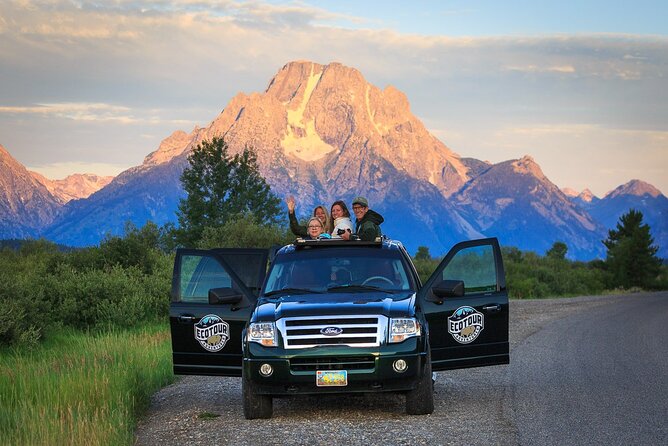
I like two things right away: seven people maximum, with a window seat for everyone, and the serious viewing gear. Your guide sets up Swarovski spotting scopes, hands out binoculars, and can use an iPad to explain what you are seeing. The vehicle’s roof hatch lets you look up without leaving the warmth of the cabin.
The trade-off is simple: wildlife never follows a schedule. You may see an impressive mix, or spend time searching with no close sighting of a grizzly or wolf. The price is also significant at $198 per person, before the park fee and tip, so this makes the most sense if wildlife is high on your Jackson Hole list.
Key reasons this sunset safari works
- Seven seats, seven good viewing positions: You are not packed into a large bus, and every passenger has a window.
- Roof hatches and panoramic windows: You can watch from inside the vehicle and look upward through the hatch when conditions allow.
- Professional optics: Binoculars and spotting scopes bring distant animals into clear view without crowding them.
- Guides with science backgrounds: Expect lessons on animal behavior, ecology, geology, and the cultural story of Jackson Hole.
- Small comforts matter: Snacks, bottled water, coffee, tea, and even hot chocolate help during a cool evening outing.
- A strong record of satisfaction: The experience is recommended by 99 percent of participants and carries a 4.9 rating from 1,020 reviews.
Sunset in Grand Teton means active wildlife
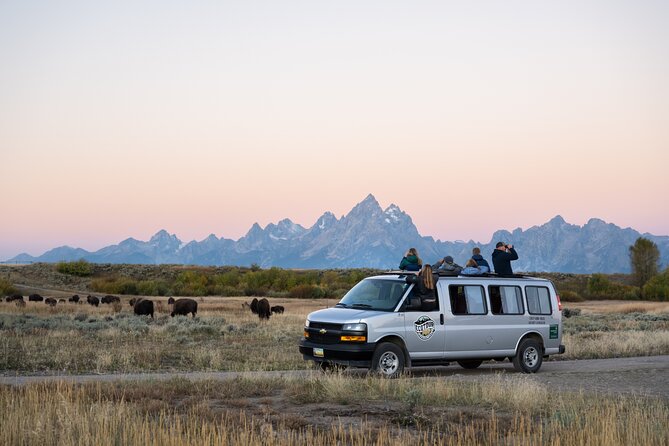
The timing is the main idea here. As daylight fades, many animals become more active, and the changing light makes the Tetons especially striking. You are not simply driving around hoping to spot something. Your guide checks known wildlife areas, watches for movement, and adjusts the route as conditions change.
That does not turn the park into a zoo. A moose may stand close to the road, while a wolf, coyote, or grizzly may appear only briefly or at a distance. This uncertainty is part of the experience, but it is also why a skilled guide and good optics matter so much.
The outing lasts about four hours. That is long enough to reach several areas without making you commit to a full-day expedition. It is also short enough to fit around a Jackson dinner reservation or another park activity.
More to weigh up across Jackson
- From Jackson Hole: Yellowstone Old Faithful, Waterfalls and Wildlife Day Tour
★ 5.0 · 1,557 reviews - Grand Teton Wildlife Safari in a Enclosed or Open-Air Vehicle (season dependent)
★ 5.0 · 1,212 reviews - Sunrise 4-Hour Grand Teton Wildlife Adventure
★ 5.0 · 899 reviews
Leaving Jackson in a seven-seat safari vehicle
The meeting point is at 210 North Cache Street in Jackson. From there, you ride in a specially designed four-wheel-drive vehicle with panoramic windows and a roof hatch. The small group size is one of the clearest advantages over a standard sightseeing coach.
A window seat for each person sounds like a minor detail until you are trying to spot a pronghorn or follow an eagle in flight. Here, you do not need to lean across someone else or wait for a seat to open up. You can keep your camera ready and shift your view quickly.
The roof opening is useful for more than dramatic photographs. It gives you a higher angle when the vehicle is stopped and can help you watch birds or animals on uneven ground. You still spend much of the outing seated inside, which is helpful if the weather turns cold or wet.
The vehicle does not make this a luxury limousine tour. It is a practical wildlife platform. You should expect a moving safari-style ride, frequent stops, and periods of quiet concentration while the guide scans the fields and tree lines.
How the wildlife search unfolds
There is one main stop on paper, Grand Teton National Park, but the four-hour route includes a series of wildlife areas within the park and Jackson Hole. Your guide may work toward places such as Mormon Row, Elk Ranch Flats, Oxbow Bend, the Chapel of the Sacred Heart area, or other known spots, depending on daylight, weather, and recent animal movement.
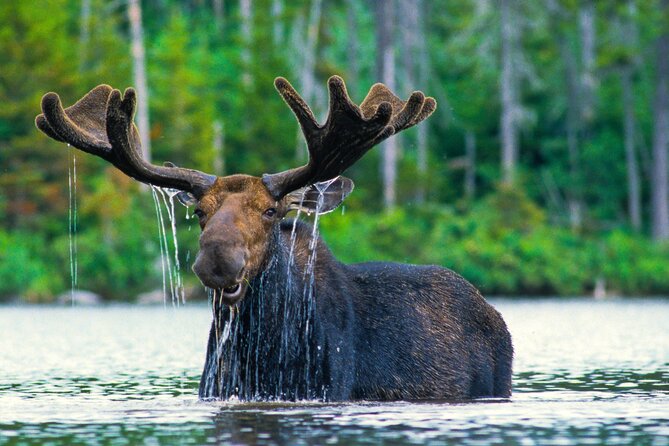
At Mormon Row, a moose may appear close to the road. Elk Ranch Flats can offer broad views of bison, elk, and pronghorn. Oxbow Bend is useful for photographs and bird sightings. These are not guaranteed stops in a fixed order, and that flexibility is a benefit. Wildlife conditions change faster than a printed route can.
The guide usually does more than point and name. You may learn why an animal is feeding in one place, how it behaves around roads, or how the mountains and lowlands shape its habitat. The discussion can also move into local geology, park history, and the cultural story of Jackson Hole.
The supplied iPads and wildlife specimens add another layer. If an animal is too far away for the naked eye, the guide can use an image or specimen to explain its features. That is especially useful for families and first-time wildlife watchers who may not yet know the difference between elk, moose, mule deer, and pronghorn at a distance.
The animals you may see
The most frequently noted sightings include bison, moose, elk, pronghorn, bighorn sheep, bald eagles, and other birds. Several outings also found coyotes, swans, pelicans, herons, beavers, great horned owls, and black bears. One sunset outing included a grizzly grazing in a meadow, while another caught a wolf.
That list should excite you, but do not treat it as a promise. The tour operates in a real national park, and the guide cannot control animal movement. The right way to judge the experience is by the quality of the search and the chance to see animals behaving freely, not by expecting a fixed checklist.
The scopes help make distant sightings worthwhile. A moose hidden near brush can become a clear animal through the eyepiece. Guides may also record photographs or video through the scope and share them afterward, which is useful when the light is fading or when several people need to see the same animal.
There is also a quiet ethical strength to the approach. Guides emphasize respect for wildlife and avoid treating animals as props. You remain at a safe distance, use optics instead of chasing close views, and learn why patience matters.
A different kind of day, same corner of the map:
- Grand Teton Half Day Tour
★ 5.0 · 1,067 reviews - Tetons and Snake River Scenic Float Trip In Jackson Hole
★ 5.0 · 1,000 reviews - Whitewater Rafting in Jackson Hole : Family Standard Raft
★ 5.0 · 965 reviews - Horseback Riding with Grand Teton Views in Jackson Hole
★ 4.5 · 916 reviews
Why the guides make the difference
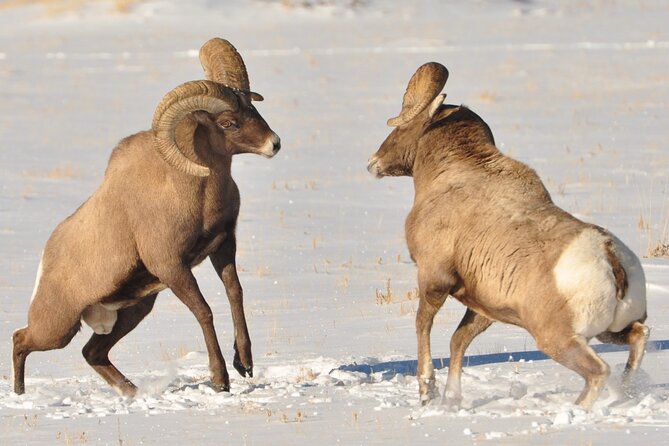
The guide is the heart of this tour. A vehicle and a scope can help, but they do not know where to look or how to explain what you find. The guides here are described as having science backgrounds and years of field experience.
Kirk receives repeated praise for his ability to locate animals and explain the area. He has helped people see bison, moose, elk, bighorn sheep, mule deer, coyotes, and even a wolf. He also adds practical touches such as snacks, coffee, hot chocolate, and warmers for cold hands.
Ricky is noted for combining wildlife spotting with stories about Jackson Hole. Billy is especially good at answering questions about mountains, animals, and local history, while Raf brings an easy, friendly style and a strong grasp of the region. Joy has taken time to explain the size and shape of the public lands before heading north, then used her scope to bring distant animals into view.
Other guides, including Ashley, Sarah, Rob, Laura, Ben, Drew, Roy, and Bo, have also been praised for their field skills and personal approach. The common thread is not a scripted lecture. You get a guide who watches your interests, stops for photographs, and changes the focus as the evening develops.
That personal attention is easier with only seven people. You can ask about animal behavior, geology, local culture, or whatever catches your eye. If you are traveling with teenagers, the format works well because the guide can respond to specific interests rather than giving a one-size-fits-all talk.
Sunset views beyond the animals
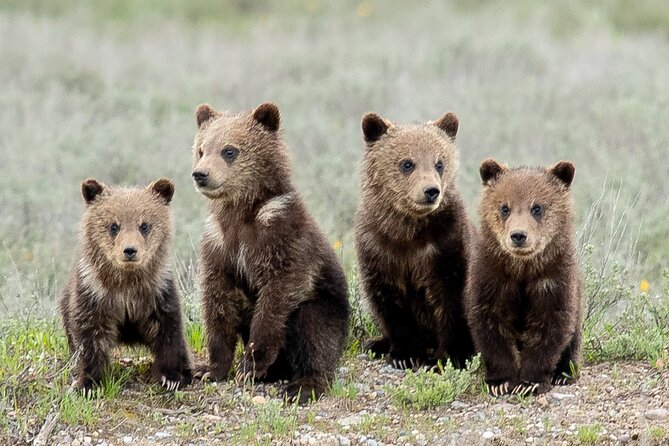
It would be a mistake to book this only for the animal list. The Tetons are a major part of the evening. As the sun lowers, the mountain light changes, and the route gives you chances to photograph both wildlife and scenery.
The guides also point out the relationship between the mountains, open meadows, water, and animal habitat. That connection makes the park easier to understand. You are not just collecting sightings. You are seeing why elk gather in one area, why water attracts birds, or why open ground helps you locate bison and pronghorn.
One outing included a view of a large moon through the guide’s scope at sunset. That kind of moment cannot be scheduled, but the timing gives you a chance to catch it.
Weather can affect the mood and the sightings. Rain, cloud, and fading light may reduce visibility. Still, guides have continued searching in poor conditions and have used the scope, video, and nearby wildlife areas to make the most of the time available.
What $198 per person buys you
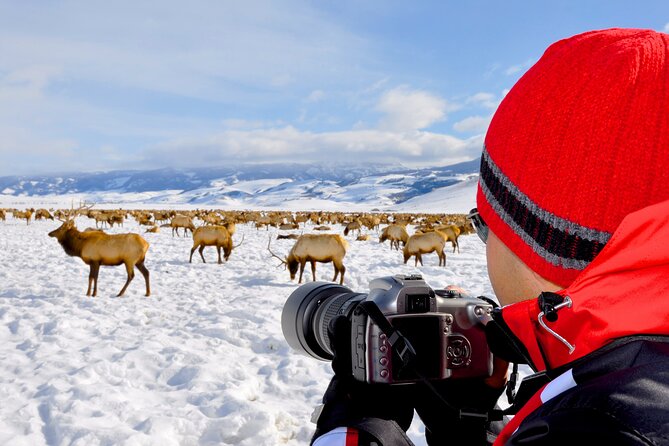
At $198, this is not the cheapest way to enter Grand Teton National Park. The value comes from the small group, the dedicated guide, the specialized vehicle, and equipment you would not normally carry with you.
You receive binoculars and access to spotting scopes, along with bottled water, snacks, coffee, and tea. Guides may also provide hot chocolate and practical cold-weather aids such as electric hand warmers. Those small touches matter during a sunset trip, when the temperature can drop as the light disappears.
The park entrance fee is separate: $20 per person, valid for seven days. Bring an existing park pass if you have one, or purchase the fee during the outing. A 15 to 20 percent gratuity for the guide is also recommended and is not included.
The price is easiest to justify if you care about seeing wildlife well, learning about the park, or avoiding the guesswork of a self-drive search. If you already know the park, own quality optics, and are happy to spend an evening looking on your own, the cost may feel high.
Who should book this tour
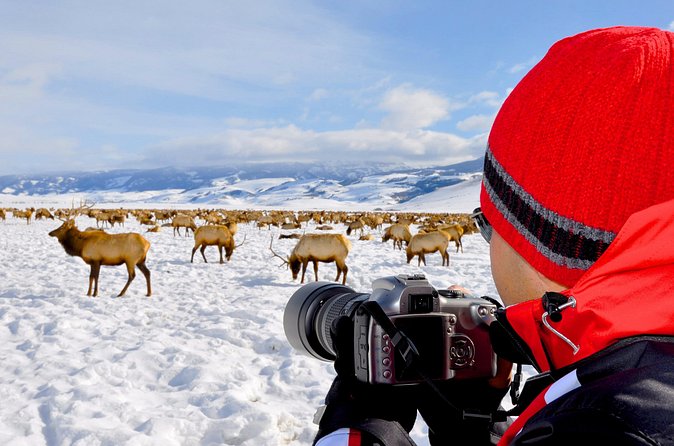
I would choose this for first-time visitors to Grand Teton, photographers who want help locating animals, couples seeking a focused evening activity, and families with older children or teenagers. The guide-led format also suits anyone who wants to understand what they are seeing instead of simply driving past a distant animal.
Children eight and under require a private tour, according to the operating rules. That private format is meant to provide more comfort and flexibility for younger children, so check the arrangements before booking if your family includes them.
Most people can take part, service animals are allowed, and the meeting point is near public transportation. The tour is offered in English. Since the vehicle holds a maximum of seven people, the experience feels personal, but it may sell out well ahead of time. It is booked, on average, 61 days in advance, so I would not leave it until the last evening of your trip.
Practical details for a better evening
Wear clothing suited to changing temperatures, even if Jackson feels mild when you leave. You are heading out at sunset, and the final part of the trip may be much colder than the start.
Bring your camera, but do not forget to watch with your own eyes. The guide may stop for photographs and may share scope images or video later, so you do not need to spend every minute trying to hold a phone steady.
Ask questions. The guides are prepared to talk about ecology, animal behavior, geology, and cultural history, and the best parts of the outing often come from connecting a sighting to the place around it.
Finally, keep your expectations realistic. A grizzly or wolf is possible, not assured. Even a slower evening can give you mountain views, good instruction, and a better sense of how wild animals use Grand Teton.
Cancellation and weather rules
You can cancel at least 24 hours before the start time for a full refund. Changes or cancellations made within 24 hours are not accepted for a refund.
The outing requires suitable weather and a minimum number of participants. If the operator cancels for either reason, you are offered another date or experience, or a full refund.
Is the Sunset Grand Teton Wildlife Adventure worth booking?
Book it if you want a short, well-supported wildlife search with a real chance of seeing moose, elk, bison, pronghorn, sheep, birds, and perhaps something rarer. The strongest reasons are the seven-person limit, the window seat for everyone, excellent optics, and guides such as Kirk, Ricky, Joy, Raf, and Billy who bring the park to life.
Skip it if $198 feels uncomfortable, if you need guaranteed sightings, or if you prefer a private self-guided drive. For most first visits, though, the combination of sunset light, expert searching, warm drinks, and a roof-hatch vehicle makes this a sensible splurge in Jackson Hole.
FAQ
How long is the Grand Teton wildlife tour?
The experience lasts approximately four hours.
Where does the tour begin and end?
It starts at 210 N Cache Street in Jackson, Wyoming, and ends back at the same meeting point.
How many people can join the tour?
The vehicle has a maximum of seven participants, and each person has a window seat.
Is the Grand Teton entrance fee included?
No. The park entrance fee is $20 per person and is valid for seven days. If you already have a park pass, bring it. If not, you can purchase the fee during the tour.
What wildlife might I see?
Possible sightings include grizzlies, wolves, elk, moose, bison, pronghorn, bighorn sheep, bald eagles, coyotes, swans, pelicans, herons, beavers, great horned owls, black bears, and mule deer. Sightings are not guaranteed.
Are binoculars and spotting scopes provided?
Yes. The tour provides binoculars and professional spotting scopes, along with iPads and wildlife specimens for learning about what you see.
Are children eight and under allowed?
Families with children eight and under must book a private tour for greater convenience, comfort, and flexibility.
What happens if I need to cancel?
You receive a full refund if you cancel at least 24 hours before the start time. Cancellations or changes made less than 24 hours before the start time are not refunded. If poor weather or an insufficient minimum group causes the operator to cancel, you are offered another date or experience, or a full refund.
Newly listed in Jackson
- Yellowstone National Park – Full-Day Lower Loop Tour from Jackson★ 5.0 · 502 reviews
- Snake River Scenic Float★ 5.0 · 534 reviews
- Whitewater Rafting in Jackson Hole: Small Boat Excitement★ 5.0 · 542 reviews
- Jackson Hole: Aerial Tram and Gondolas Sightseeing★ 4.8 · 632 reviews
- Jackson: Grand Teton National Park Guided Wildlife Tour★ 4.8 · 676 reviews
- Yellowstone Lower Loop Full-Day Tour★ 5.0 · 687 reviews
- Snake River Scenic Float Trip with Teton Views in Jackson Hole★ 5.0 · 864 reviews
- Sunrise 4-Hour Grand Teton Wildlife Adventure★ 5.0 · 899 reviews
Wildlife, compared.
Everglades Airboat, Wildlife Show & Bus Transfer
Read our review →
Everglades National Park Airboat Tour & Wildlife Show
Read our review →
Juneau Wildlife Whale Watching & Mendenhall Glacier
Read our review →
Wilderness, Wildlife, Glacier Experience from Anchorage
Read our review →
Shark and Wildlife Viewing Adventure in Key West
Read our review →
Everglades Airboat, Wildlife Show, and Roundtrip Bus From Miami
Read our review →Browse the lists this tour appears in