
Reviewed · BOSTON TOURS
Boston’s Freedom Trail: A Revolutionary Walking Tour
Boston’s Freedom Trail is more than a line of red bricks. It is a fast-moving lesson in how a port town became the launch point for a revolution, with stops tied to riots, sermons, graves, lantern signals, and midnight rides. This tour takes you across all 16 official sites, beginning at The Embrace and ending near the North End.
I like two things here. First, a guide gives the famous names, Paul Revere, John Hancock, and Samuel Adams, a human scale. Second, the route adds abolition, women’s rights, education, immigration, and Boston’s 400-year story instead of treating 1776 as the whole city. The catch is simple: 2.5 hours is a brisk stretch of walking, and some people have found it hard to keep up or hear every word in a large group.
Key points to know before booking
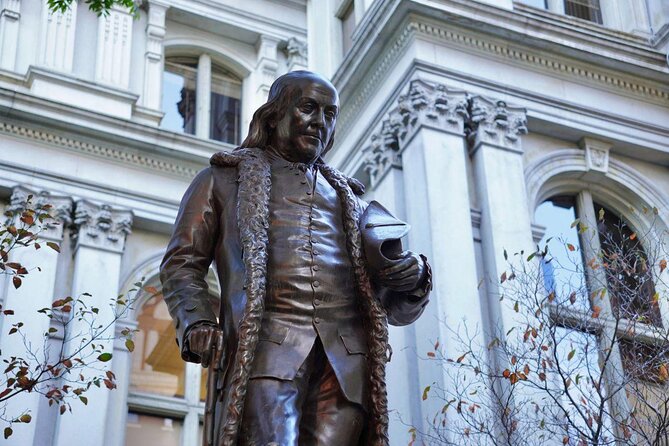
- All 16 Freedom Trail sites in one walk: You cover the recognized route rather than picking off only the best-known landmarks.
- A strong cast of guides: Kenny, Alissa, Jim, Alfred, Julia, Sam, Noah, and others have been praised for clear storytelling, humor, and answers to detailed questions.
- A real history lesson, not just photo stops: The tour connects the Revolution with abolition, women’s rights, education, immigration, and the city’s early years.
- A North End finish: Copp’s Hill Terrace gives you views of Bunker Hill Monument and the USS Constitution across the water.
- Good value at $31: The price pays for a guide who organizes a lot of ground and supplies context you would miss walking alone.
- Plan for several miles on foot: Wear comfortable shoes, check the weather, and stay close enough to hear the guide.
Starting at The Embrace and Boston Common

The tour begins beside the Boston Common Visitor Information Center at 139 Tremont Street, near The Embrace. This recent memorial to Martin Luther King Jr. and Coretta Scott King gives the walk a useful opening note: Boston’s story did not end with the Revolution, and its struggle over freedom continued long after the famous patriots were gone.
From here, you move toward the Massachusetts State House. The building’s golden dome is an easy landmark, but the useful detail is below it: Samuel Adams laid the cornerstone in 1795. That small fact helps place the new state government in the uneasy period after independence, when the former colony had to build its own political structure.
I appreciate this start because it avoids dropping you straight into a patriotic script. You begin with a modern memorial, then move into government, protest, and public life. It gives you a wider frame for the stops ahead.
More Walking Tours in Boston
- Boston: Freedom Trail History Small Group Walking Tour
★ 5.0 · 6,450 reviews - Harvard University Campus Guided Walking Tour
★ 4.5 · 3,632 reviews - Boston Freedom Trail Walking Tour with Costumed Guide
★ 4.5 · 2,531 reviews
Abolitionist speeches and the city’s early burial grounds
The next church is a red brick building from 1809 with a congregation tied to abolition. Your guide explains the force of the anti-slavery speeches delivered inside, including some of the earliest of their kind in America.
This is one of the tour’s most useful choices. Boston is often presented as the birthplace of liberty, but liberty was argued over, limited, and demanded by different groups. The abolition stop makes the city’s ideals more complicated, and more honest.
Granary Burying Ground, dating to 1660, brings the focus back to the Revolutionary era. John Hancock, Paul Revere, and Samuel Adams are buried here, and your guide uses their graves to sort out who these men were beyond their names in schoolbooks.
A cemetery can become a long pause on a walking tour, and this is one place where timing matters. Some guides give the burial grounds extra attention, while the rest of the route then feels rushed. If you have a walking stick, limited stamina, or trouble standing in a crowd, tell the guide early and position yourself where you can hear.
King’s Chapel, crypts, and the Boston Tea Party
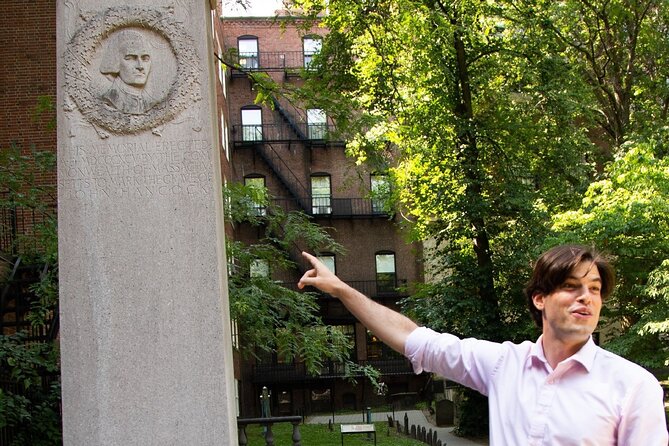
King’s Chapel was built in 1754 as Boston’s first Anglican church. Its stone walls, adjoining burial ground, and crypts offer a different view of colonial Boston, one tied to the Church of England and the British presence that many Puritans resisted.
The stop works because the tour does not treat every church as the same. The buildings reflect different groups, beliefs, and political loyalties. Your guide fills in the conflict that a quick photograph cannot show.
The walk then reaches the Old South Meeting House, a Puritan meeting house built in 1729. This is where the Boston Tea Party began, with a large gathering that turned a dispute over taxation and trade into a defining act of resistance.
I would pay close attention here, since the site is easy to reduce to a slogan. The key value of a guide is context: what brought the crowd together, why the meeting mattered, and how public speech could push events toward direct action. One point to keep in mind is that the tour covers a lot, so the Tea Party segment may not answer every detail about the evening, including the exact size of the group or a full step-by-step account.
A literary address and the Old State House
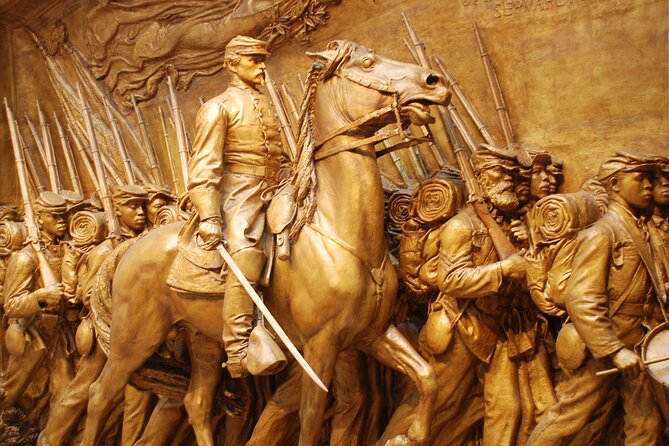
A 1718 brick building once served as a colonial apothecary and later became the 19th-century publishing house Ticknor & Fields. Your guide connects the address with literary figures published there, adding a cultural layer to a route often dominated by soldiers and politicians.
This brief stop helps you see Boston as more than a battlefield. Medicine, publishing, churches, trade, and public debate all occupied the same compact streets. The Freedom Trail works best when you notice that overlap.
The Old State House, built in 1713, is one of the route’s most striking political buildings. Its Lion and Unicorn symbols point to British rule, while the building itself served as the center of British government in Massachusetts.
Inside and around this site, your guide explains the speeches and confrontations that sharpened the break with Britain. The building is also a good reminder that the Revolution was not born in a single dramatic moment. It grew from repeated arguments over authority, taxation, representation, and who had the right to speak for the colony.
More walking tours around Boston:
- The Full Revolutionary Story Epic Small Group Boston Walking Tour
★ 5.0 · 2,356 reviews - Boston’s Freedom Trail: A Revolutionary Walking Tour
★ 4.9 · 1,748 reviews - Boston: Freedom Trail History Small Group Walking Tour
★ 4.9 · 1,590 reviews - Boston’s North End Food Tour: Italian Flavors & Heritage Walk
★ 5.0 · 1,322 reviews
The Boston Massacre and Faneuil Hall
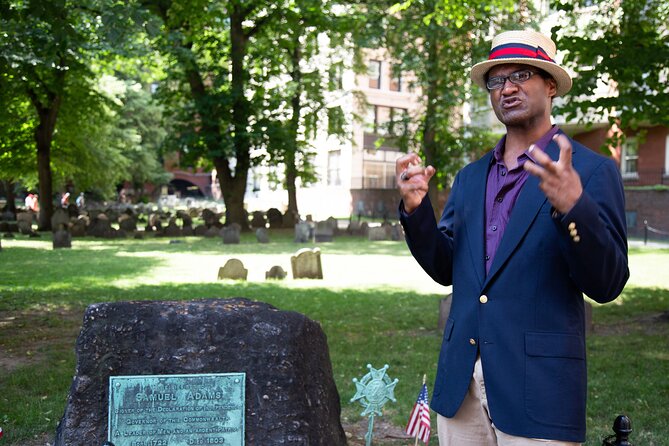
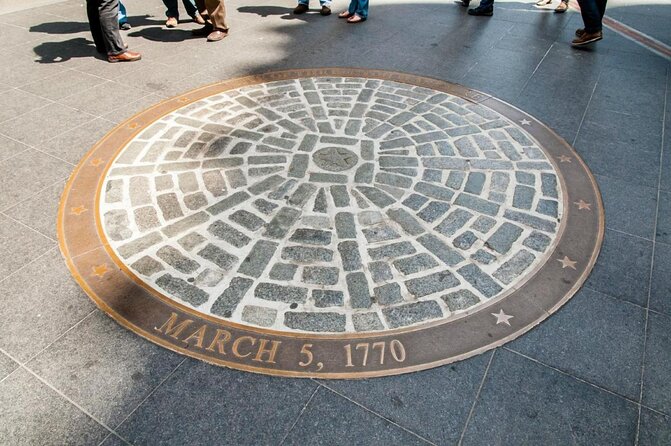
A circle of stones marks the site of the 1770 Boston Massacre. Here, five colonists died after British soldiers fired into a crowd. Your guide reconstructs the sequence of events and explains why the incident became such a powerful political tool.
The stop is compact, but its importance is large. The event helped colonial leaders turn local anger into a wider argument against British military control. Seeing the site in the middle of modern downtown also shows how much Boston has grown around its old conflicts.
Faneuil Hall follows. Built in 1743 as a marketplace, the upper meeting hall became more important than the market below. It earned the name Cradle of Liberty because of the speeches delivered there.
I like the pairing of these two stops. The Boston Massacre shows conflict in the street, while Faneuil Hall shows how speeches, meetings, and public pressure shaped the response. You get both the action and the argument.
Paul Revere’s house in the North End
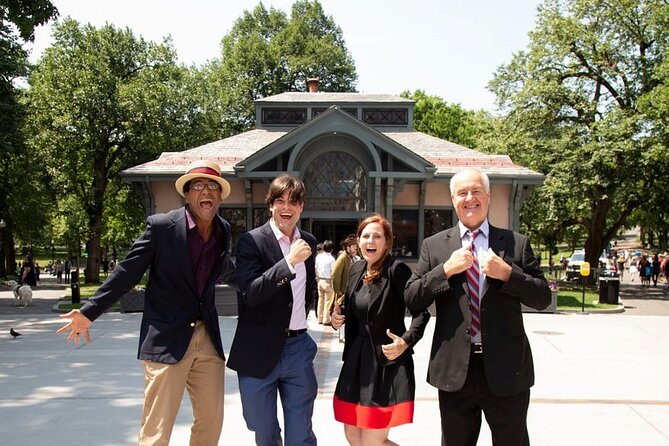
Paul Revere’s House dates to 1680 and is the oldest building in Boston. It was home to the Revere family, and the guide explains Revere’s domestic life as well as his public role.
That balance matters. Paul Revere is usually frozen in the image of a rider shouting a warning, but this house brings him back to the scale of family, work, and neighborhood. You also begin to feel the North End’s close streets and older buildings, a welcome change from the broad civic spaces earlier in the walk.
The stop may be viewed from outside as part of the route, and the supplied details do not promise an interior visit. I would treat it as a storytelling stop rather than assume you will have time to tour every building. The full walk is about coverage and context, not lengthy visits inside each attraction.
Old North Church and the lantern signal
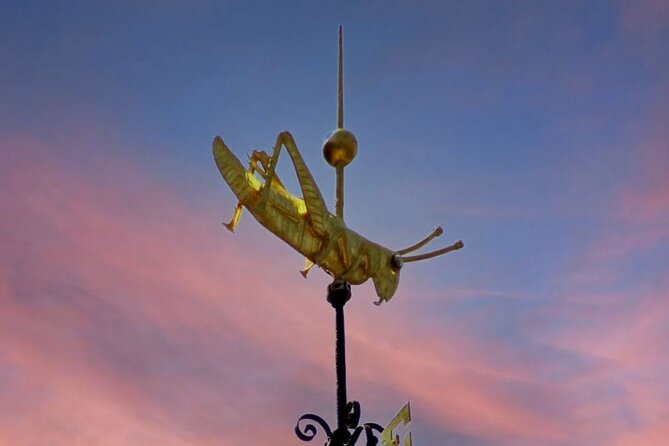
Old North Church dates to 1723 and is tied to the famous signal of April 18, 1775: one lantern if the British came by land, two if by sea. Your guide explains how the signal was arranged by Paul Revere and why it mattered on the eve of the Revolution.
This is one of the easiest stories to remember because the physical setting supports it. The church steeple, the lanterns, Revere’s plans, and the approaching military movement all fit into one clear scene.
Construction at Old North Church has affected the experience at times, and other groups may gather along the Freedom Trail. A good guide can work around those conditions, but you should expect an active city route rather than a quiet museum visit.
Copp’s Hill, Bunker Hill, and Old Ironsides
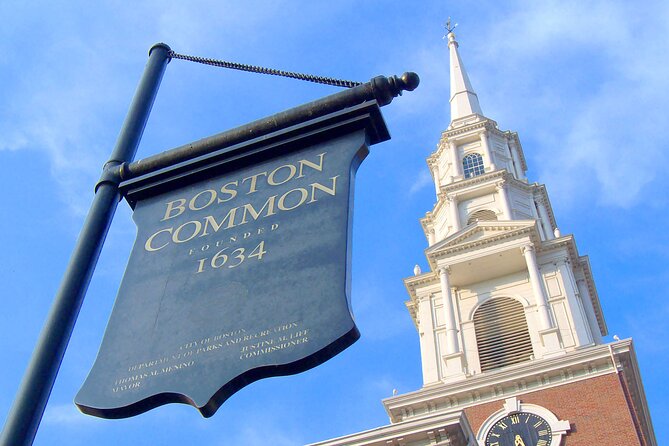
Copp’s Hill Burying Ground dates to 1660 and was used for British cannon positions during the Battle of Bunker Hill. The graves here connect Boston’s residents with the military events unfolding around them.
From Copp’s Hill Terrace, you view the 221-foot Bunker Hill Monument. The monument marks the area where colonial militia held hastily built earthworks and repelled two British charges before retreating.
The tour does not end at the monument itself. Instead, the finish at Copp’s Hill gives you a view across to Bunker Hill Monument and the masts and rigging of USS Constitution. Old Ironsides, launched in the early republic and famous for victories in the War of 1812, is the world’s oldest warship still afloat.
This ending is smart. You finish with a broad view that links the Revolution to the next generation of American military history. It also places you in Boston’s North End, a useful area for continuing your own sightseeing after the tour.
What the $31 price gives you
At $31 per person, this is a good buy if you want the complete route in one organized outing. You are paying for the guide’s selection of details, the walking order, and the ability to connect places that can otherwise feel like disconnected plaques.
Walking the Freedom Trail alone costs less, but the tradeoff is time and preparation. You would need to map the 16 sites, understand which building relates to which event, and decide how much background to read before arriving. A guide also adds the human details that make Paul Revere, Samuel Adams, and the people buried in the old graveyards easier to remember.
The value is strongest for a first visit, a family group, or anyone who likes history but does not want to read a guidebook while walking. It is also useful at the start of a Boston stay because it gives you a map of the old center and points out places you may want to revisit.
The value is weaker if you want long interior visits, a slow photography walk, or a narrow focus on the Boston Tea Party. This is a broad survey, and the route has to keep moving to fit all 16 official sites into roughly two and a half hours.
Pace, group size, and hearing the guide
The maximum group size is 25 people. That is small enough for a personal feel when the group stays together, but large enough to create sound problems on busy streets.
Guide quality is a major part of the experience. Guides praised for clear delivery and humor include Alissa, Jim, Kenny, Alfred, Julia, Sam, Noah, Charles R., Stewart, Kathy, Eliot, and Rob Crean. The strongest pattern is not one particular personality. It is the ability to make the stories lively, answer questions, and keep people moving without turning the walk into a race.
Pacing can vary. Some people have found it ideal, while others felt the route moved too quickly, especially after a long stop in a cemetery. Wear shoes made for several miles, arrive ready to walk, and stay near the guide. If hearing is a concern, avoid drifting to the back of the group. A few people have found it hard to hear when the guide was not facing them, particularly with a larger group.
The tour is offered in English, uses a mobile ticket, allows service animals, and begins near public transportation. It requires moderate physical fitness. The experience depends on good weather, and poor conditions can lead to a different date or a full refund.
Who should book this Freedom Trail walk?
I would choose this tour for a first-time Boston visit, families with older children or teenagers, couples who like stories with their sightseeing, and anyone who wants the full trail without planning each stop. The guides have been especially effective with teenagers when they mix clear facts, humor, and vivid scenes.
History buffs should enjoy the breadth, though even an expert may want to ask questions to steer the conversation toward a favorite topic. The tour can also suit someone who is unsure about Boston. A lively guide and a clear route can make the city’s past easier to grasp than a self-guided walk through unfamiliar streets.
I would think twice if you walk slowly, need frequent rests, or want to enter every landmark. The route is long, the schedule is fixed, and the group cannot spend unlimited time at any one site. The tour company does offer free cancellation up to 24 hours before the start time, but changes or cancellations inside that window are not accepted.
FAQ
How long does Boston’s Freedom Trail walking tour last?
The tour lasts approximately 2 hours and 30 minutes.
How much does the tour cost?
The listed price is $31 per person.
Does the tour visit all 16 official Freedom Trail sites?
Yes. The tour is designed to cover all 16 official sites of Boston’s Freedom Trail.
Where does the tour begin?
It begins at The Embrace, located at 139 Tremont Street beside the Boston Common Visitor Information Center in Boston.
Where does the tour end?
It ends at Copp’s Hill Terrace in Boston’s North End. The listed meeting information also gives 7 Jackson Avenue, Boston, as the end location, with views of Bunker Hill Monument and USS Constitution.
What language is the tour offered in?
The tour is offered in English.
How large can the group be?
The maximum group size is 25 people.
Is the tour physically demanding?
You should have a moderate level of physical fitness. The route involves a long walk, and comfortable shoes are recommended.
What happens if the weather is poor?
The experience requires good weather. If the tour is canceled because of poor weather, you will be offered another date or a full refund. You can also cancel for a full refund up to 24 hours before the start time.
Should you book it?
Book it if you want Boston’s major Revolutionary landmarks explained in one well-organized walk, and you are comfortable covering several miles at a steady pace. At $31, the guide adds enough context to make the route worthwhile, especially on a first visit.
Skip it if your priority is a slow museum day or an in-depth visit inside each building. For most people, though, the combination of Paul Revere’s house, the old burying grounds, the Boston Massacre site, Old North Church, and the final view toward Bunker Hill makes this a practical and memorable introduction to Boston.
Newly listed in Boston
- New England Aquarium Admission Ticket in Boston★ 4.0 · 446 reviews
- Boston’s Politically Incorrect North End Food Tour★ 5.0 · 453 reviews
- Boston’s North End Food and History Walking Tour★ 5.0 · 459 reviews
- Downtown Freedom Trail, Beacon Hill & Back Bay Walking Tour★ 4.5 · 473 reviews
- Cambridge, Massachusetts: MIT and Harvard Walking Tour★ 4.7 · 486 reviews
- Narrated Sunset Cruise of Boston Harbor★ 4.0 · 532 reviews
- Sightseeing Day Sail around Boston Harbor★ 5.0 · 541 reviews
- Boston: Harbor Sunset Yacht Cruise★ 4.6 · 570 reviews
Boston Tours, compared.
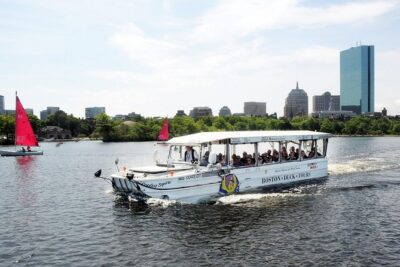
Boston Duck Boat Sightseeing City Tour with Cruise Along Charles River
Read our review →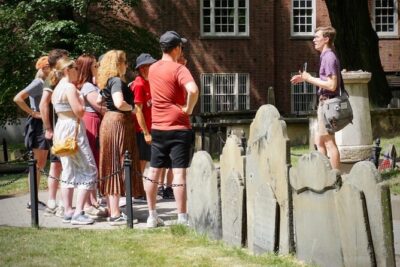
Freedom Trail History Small Group Walking Tour
Read our review →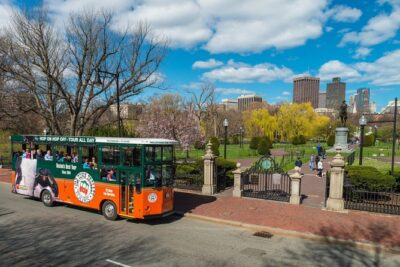
Boston Hop-On Hop-Off Trolley Tour with 13 Stops
Read our review →

Boston Duck Tour: The Original and World-Famous
Read our review →
Harvard University Campus Guided Walking Tour
Read our review →
Boston Fenway Park: Guided Ballpark Tour with Options
Read our review →
Boston to Martha’s Vineyard Day Trip with Optional Island Tour
Read our review →Browse the lists this tour appears in