
Reviewed · NEW YORK CITY TOURS
SoHo, Little Italy, and Chinatown 2-Hour Guided Walk
SoHo’s polished boutiques and cast-iron façades hide a past of factories, immigrant labor, crime, and hard city life. In two hours, this English-language walking tour links SoHo, Little Italy, and Chinatown, ending near Columbus Park.
I like the sharp contrast between the three neighborhoods, and I like the way the route uses real street corners rather than a string of museum displays. Guides such as Angela, Steve, George, and Felipe bring plenty of personality, though the pace and exact stops can vary, and this is not a good choice if walking is difficult.
Key points to know before you book
- Three neighborhoods in two hours: The route gives you a compact introduction to SoHo, Little Italy, and Chinatown.
- Cast-iron SoHo: Look up at the E.V. Haughwout Building and other ornate façades while hearing how the area changed over time.
- Crime and organized crime stories: The Manhattan Well Murder, John Gotti, Joe Gallo, the Opium den, and Doyers Street all appear in the route.
- Food advice, not a meal: You can hear about pizza, cannoli, cheese, and Chinese food, but food costs are not included.
- Guides make the difference: Angela, Steve, George, Alex, Felipe, and others have been praised for humor, local stories, and clear explanations.
- Easy to pair with lunch: The walk ends at Columbus Park, putting you in a useful spot for further Chinatown exploring.
Why this short walk works so well in Lower Manhattan
Many New York tours try to cover too much ground. This one has a tighter plan: three nearby districts, about 40 minutes in each, and a steady shift in mood as you walk south and east.
You begin in SoHo, where luxury shopping and expensive apartments now fill handsome old buildings. Then you move into Little Italy, where immigration, family businesses, religious traditions, and Mafia stories take over. Chinatown brings another change, with tales of Chinese immigrant life, gang conflict, old restaurants, and Doyers Street.
I like this format for a first visit because it helps you understand the city by comparison. You are not simply looking at attractive streets. You are seeing how different communities occupied the same small part of Manhattan at different times.
The tour costs $39 per person. For New York, that is a fair price for a live two-hour walk, especially if your guide is one of the strong storytellers in the company. You are paying for context and orientation, not admission to a major attraction or a full meal.
More Walking Tours in New York City
- SoHo, Little Italy, and Chinatown Walking Tour in New York
★ 5.0 · 3,153 reviews - Secrets of Grand Central Station Walking Tour New York City
★ 5.0 · 1,796 reviews - Greenwich Village Walking and Food Tasting Tour
★ 5.0 · 1,572 reviews
Starting in SoHo among cast-iron façades
The meeting point is at Spring Street Park, although the exact meeting point can depend on the option you book. Arrive ready to walk and keep an eye on your booking details for the correct starting instructions.
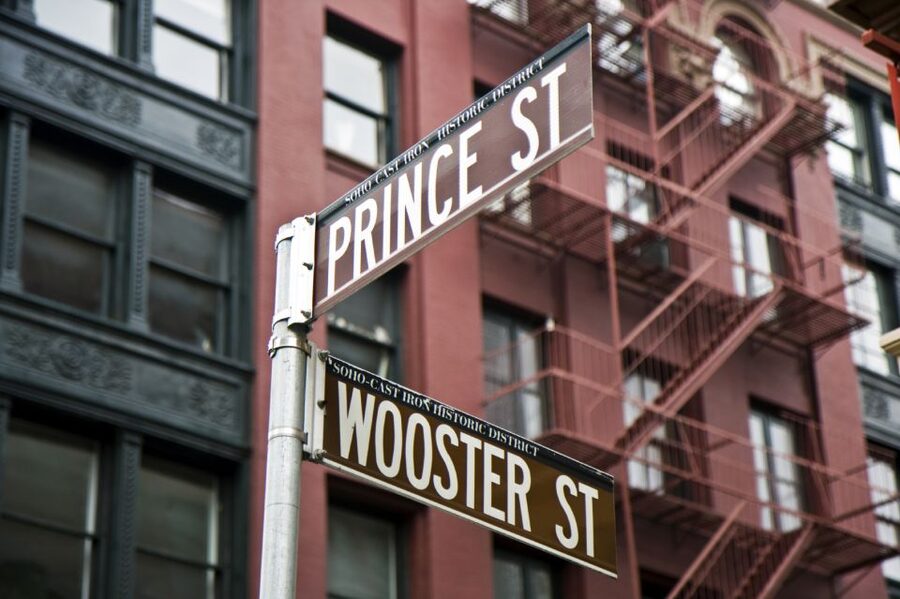
SoHo is best viewed with your head tilted upward. Its cast-iron buildings have decorative fronts that can look almost too neat for the modern retail district below. The tour uses these buildings to explain the area’s earlier working life and its later transformation into one of Manhattan’s most fashionable addresses.
The Cast Iron district is the visual heart of the opening section. Your guide may point out details that are easy to miss while shopping, such as columns, window patterns, and ornate metalwork. The point is not simply that the streets are pretty. It is that SoHo’s architecture records a major change in New York, from manufacturing and commercial use to art, fashion, and costly housing.
The route includes Spring Street and the corner of Greene and Spring streets, the site connected with the Manhattan Well Murder. This was the first recorded murder case in New York City, giving the opening section an unexpected turn. One minute you are looking at elegant façades, and the next you are hearing about a crime from the city’s early years.
The E.V. Haughwout Building is another important stop. It was home to the first safety elevator, a detail that helps explain how New York buildings grew taller and how upper floors became more useful. This is the sort of small fact that makes architecture easier to read as you continue around the city.
The tour also points out 421 Broome Street, associated with Heath Ledger’s death in Mary Kate Olsen’s apartment. It is a sensitive modern detail, and its inclusion shows that the walk is not limited to distant history. Pop culture references help keep the tour connected to the New York many people already recognize from films, television, and celebrity news.
You may also hear about famous residents, movie locations, fashion, and the possibility of spotting celebrities in SoHo. Keep expectations sensible. Celebrity sightings are never guaranteed, but the area does attract high-profile shoppers, residents, and visitors.
Little Italy, from Mulberry Street to mob stories

The move into Little Italy is the strongest shift in the tour. The architecture remains urban and tightly packed, but the subject changes to immigration, work, family, food, religion, and organized crime.
Mulberry Street is the main thread. Your guide explains how Italian immigrants shaped this part of Manhattan and how the neighborhood changed as families moved elsewhere and restaurants became a larger part of its public identity. I find this useful because the district can look like a restaurant zone if you walk through without context.
The story of immigration here is not presented as a simple success tale. The tour focuses on struggle, including the hard conditions faced by newcomers trying to build a life in New York. That makes the storefronts and churches feel more meaningful than they would on a quick stroll.
Food is part of this section, but food is not included in the $39 price. You may have time to buy something, and the guide can point you toward Italian specialties such as pizza, cannoli, and cheese. One stop is Alleva Dairy, associated with a century of cheese-making. Treat this as a chance to get recommendations and perhaps make a purchase, not as a promised tasting menu.
The Old Saint Patrick’s stop adds another layer. Churches were central to immigrant communities, offering worship, social ties, and a familiar place in an unfamiliar city. The National Shrine Church of San Gennaro brings in another memorable story, the liquefaction of the saint’s blood, a tradition tied to devotion and local identity.
The Italian American Museum is linked with the Triangle Shirtwaist Factory fire. This is one of the more serious moments on the route. The subject connects immigration, factory work, women’s labor, and public safety. It also reminds you that the Lower East Side story is not only about restaurants and colorful legends.
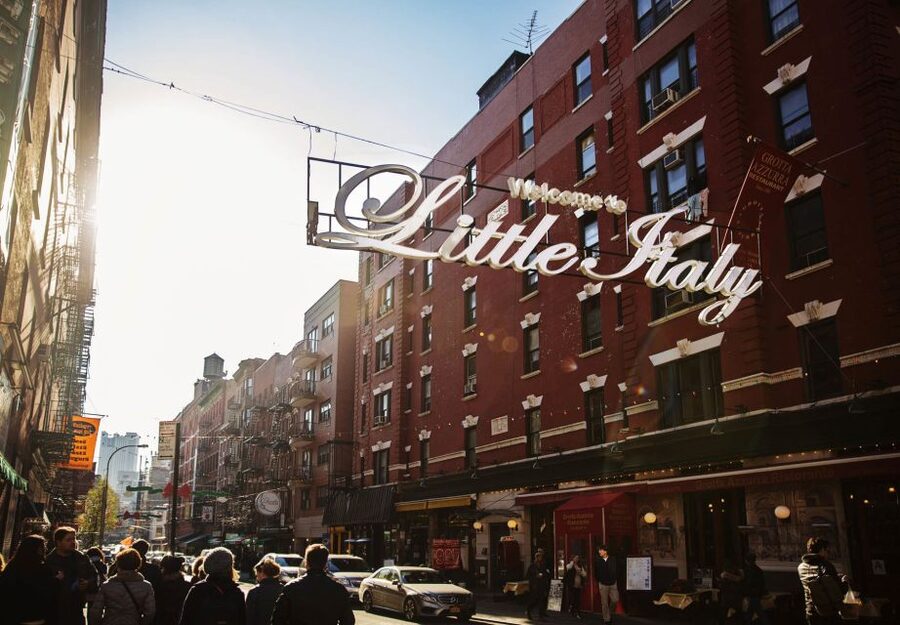
Little Italy’s crime stories are likely to attract attention, and the tour does not shy away from them. At the Ravenite Club, you hear about John Gotti and the role the location played in Mafia lore. At Umberto’s, the story turns to the mob hit on Joe Gallo.
These stops are interesting because they connect crime stories to ordinary streets. They also need a little perspective. Organized crime is part of the neighborhood’s past, but it is not the whole identity of Little Italy, and the tour is most useful when it places gang history beside immigrant life, food, religion, and changing communities.
A short pause may allow you to buy a snack or explore part of Little Italy on your own before the group continues. The timing can vary, so do not plan a full restaurant meal during the walk. If you want lunch, save it for after the tour.
Chinatown and the stories of Doyers Street
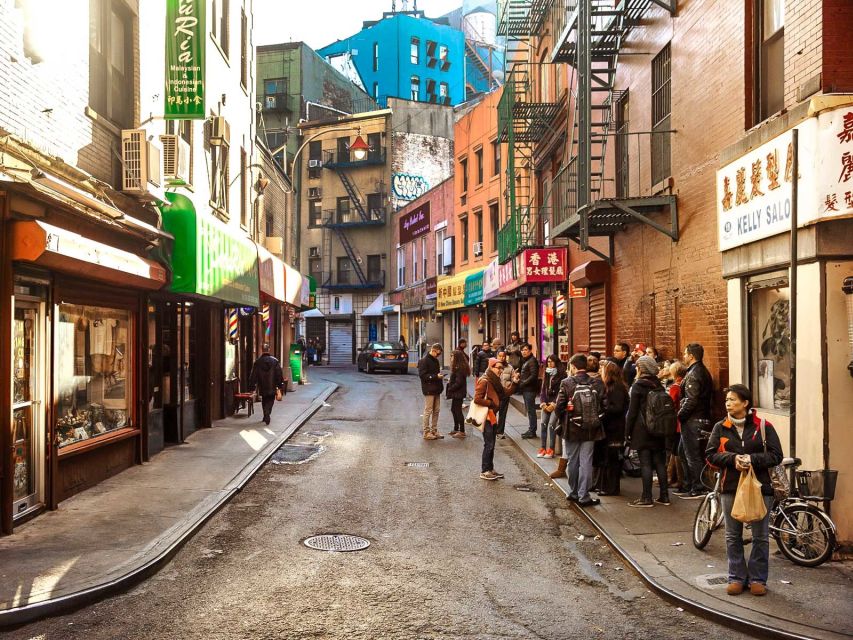
Chinatown brings another change in architecture, food, language, and local history. The guide explains how Chinese immigrants built a community in a city that often treated newcomers harshly. As in Little Italy, the value is in hearing about the people behind the storefronts rather than simply passing through an attractive commercial district.
The route includes the old Opium den, a reminder of the neighborhood’s more troubled associations in popular memory. Your guide can help separate fact from the dramatic image often used in movies and crime stories.
Doyers Street, known as the Bloody Angle, is the most striking Chinatown stop. Its sharp bend made it difficult to see around the corner and became associated with violence between rival Chinese gangs. It is a narrow, ordinary-looking street today, which makes the stories feel especially close to the present.
This is a good example of what a guide adds. On your own, you might notice the bend, take a photo, and keep walking. With the story, the shape of the street becomes part of the explanation.
The walk finishes at Columbus Park, a useful endpoint near Chinatown. The park is associated with the gangs portrayed in Gangs of New York, giving the final stop a link to popular culture as well as city history. The tour does not end at a single major attraction, so think of Columbus Park as a place to continue exploring, eat nearby, or rest after the walk.
More to weigh up across New York City
- NYC: Circle Line 2h Harbor Lights Cruise Skip-The-Box-Office
★ 4.6 · 8,222 reviews - 2-hour Metropolitan Museum Guided Tour
★ 5.0 · 515 reviews - 2-Hour Exotic Car Driving Experience in Las Vegas
★ 5.0 · 2,870 reviews - Rock Springs 2-Hour Glass Bottom Guided Kayak Eco Tour
★ 5.0 · 2,459 reviews
Guides who shape the experience
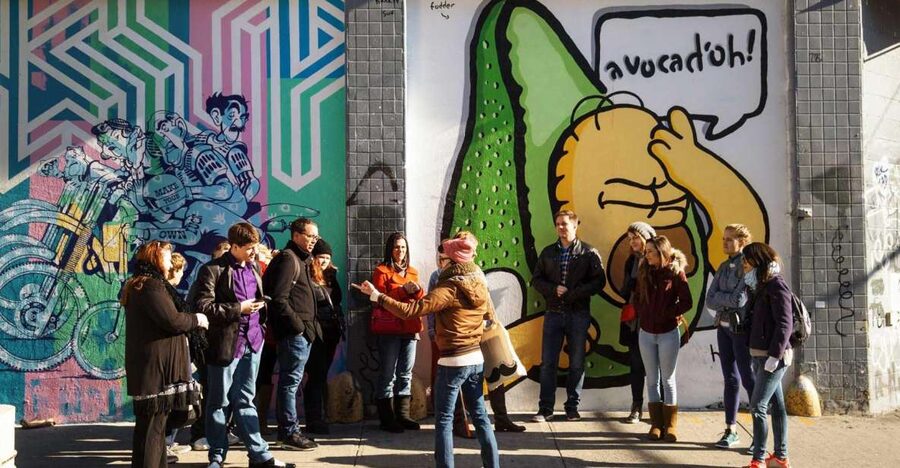
The content is strong, but the guide controls the pace and mood. The most praised guides include Angela, Steve, George, Alex, Felipe, Ari, Jacob, Peter, and others. Guide assignments can change, so you should not book on the assumption that one particular person will lead your departure.
Angela is frequently described as funny, energetic, and well prepared. She has handled busy streets and mixed-age groups while making time for questions. Steve brings local connection and personal stories, and he has been described as someone who has lived in the area for decades.
George is noted for humor, warmth, and clear explanations. Felipe mixes food tips, true crime, neighborhood origins, and small anecdotes. Alex has been praised for clear delivery, useful suggestions, and stories about former residents.
Those details matter because this is a spoken tour. You are outside, often near traffic and other pedestrians, with no display panels or printed exhibit text. A guide who speaks clearly, watches the group, and welcomes questions can turn a basic walk into a memorable one.
The strongest pattern is history delivered with humor and personality. Several guide descriptions also point to practical care, such as finding shade on a hot day and keeping an eye on traffic. That is helpful in New York, where comfort depends as much on street conditions as on the subject.
Pace, footwear, and practical comfort
The walk lasts two hours, with roughly 40 minutes allocated to each neighborhood. Reviews describe the pace as manageable, but this is still an outdoor walking tour across city streets.
Wear comfortable shoes. You will be standing while listening, crossing streets, and moving through areas that can be crowded. Bring weather-appropriate clothing, since the tour continues in heat, cold, or light rain unless conditions affect the schedule.
The experience is not suitable for people with mobility impairments. If you need frequent seating, have difficulty with curbs, or cannot comfortably walk for two hours, this is probably not the right format.
I would also avoid scheduling it immediately before a fixed reservation. The walk is designed to keep moving, but questions, street crossings, and the pace of the group can affect the finish time.
Because food costs are separate, carry money or a payment method if you want to stop for cheese, a snack, or another local specialty. The food advice is one of the practical benefits of the tour, but it is not a replacement for a planned meal.
Who will get the most from this tour
This walk suits first-time visitors who want a quick sense of how Lower Manhattan fits together. It is also useful if you have already passed through SoHo, Little Italy, or Chinatown and felt you were seeing only the surface.
I would recommend it to:
- Couples and solo visitors who want a guided introduction without spending half a day on a tour
- Families with older children who enjoy crime stories, architecture, and food
- Visitors interested in immigration and the way neighborhoods change
- Film and television fans who like seeing real places connected with famous stories
- People who want restaurant and snack ideas before exploring on their own
It may be less suitable if you want long interior visits, extensive free time, or a quiet architectural lecture. The route is outdoors and story driven. You see many locations from the street rather than entering every building.
The tour can work for a private family group as well. One family group with three children praised the guide for engaging everyone, but the ability to hold children’s attention will still depend on their age and interest in history.
Is $39 a fair deal?
At $39, I consider this good value if you want a live guide and a clear introduction to three complicated neighborhoods. A self-guided walk costs less, of course, but you would need to research the Manhattan Well Murder, cast-iron construction, the Triangle Shirtwaist Factory fire, the Ravenite Club, Joe Gallo, and Doyers Street before setting out.
The real value comes from the links between the stops. The Haughwout Building is not just an old façade. San Gennaro is not just a church. Doyers Street is not just a bent lane. The guide gives each place a reason to matter.
The tradeoff is depth. Forty minutes per district cannot tell every story or provide a full study of Italian American, Chinese American, or SoHo history. Think of this as a lively orientation, then use the final stop at Columbus Park to decide where you want to return.
Free cancellation up to 24 hours before the start and the option to reserve now and pay later make the booking flexible. Check the available start times and meeting point for your chosen option, since those details can vary.
Should you book the SoHo, Little Italy, and Chinatown walk?
Book it if you want three very different New York neighborhoods in one compact outing, especially if architecture, immigrant stories, food tips, and organized crime history all appeal to you.
I would book this early in a New York stay. The SoHo and Chinatown orientation can help you choose where to return for shopping, lunch, photography, or a longer independent walk. The tour is also a good use of two hours before an afternoon meal in Chinatown.
Skip it if you dislike walking, want extensive time inside museums and churches, or prefer to explore at your own speed. For most visitors who can comfortably walk for two hours, $39 buys a useful introduction, strong local storytelling, and a better understanding of streets that are easy to pass without noticing.
FAQ
How long does the walking tour last?
The tour lasts two hours, with about 40 minutes planned for SoHo, 40 minutes for Little Italy, and 40 minutes for Chinatown.
What language is the tour offered in?
The tour is conducted in English with a live English-speaking guide.
Where does the tour start?
The listed starting location is Spring Street Park in SoHo. The exact meeting point may vary depending on the option you book, so check your booking details.
Where does the tour finish?
The walk finishes at Columbus Park in Chinatown.
Is food included in the price?
No. Food costs are not included. You may receive food recommendations and may have an opportunity to buy a snack or specialty during the walk.
What should I bring?
Bring comfortable shoes and clothing suited to the weather. The tour is not suitable for people with mobility impairments.
Newly listed in New York City
- NYC: Brooklyn Graffiti & Street Art Walking Tour in Bushwick★ 4.8 · 492 reviews
- Hell’s Kitchen Guided Food Tour★ 5.0 · 494 reviews
- Manhattan Neighborhood Private Customized Walking Tour★ 5.0 · 498 reviews
- The Big Apple Helicopter Tour of New York City★ 4.5 · 498 reviews
- Harlem: Central Harlem Sunday Gospel with Locals★ 3.9 · 499 reviews
- Central Park TV and Movie Sites Walking Tour★ 4.5 · 499 reviews
- NYC: City Climb Skyscraping Experience Ticket★ 4.8 · 511 reviews
- 2-hour Metropolitan Museum Guided Tour★ 5.0 · 515 reviews
New York City Tours, compared.

Empire State Building Tickets – Observatory & Museum
Read our review →
Statue of Liberty and Ellis Island Tour: All Options
Read our review →


New York CityPASS®: Save up to 41% at 5 Top Attractions
Read our review →Browse the lists this tour appears in