
Reviewed · THE USA
San Francisco: California Academy of Sciences Entry Ticket
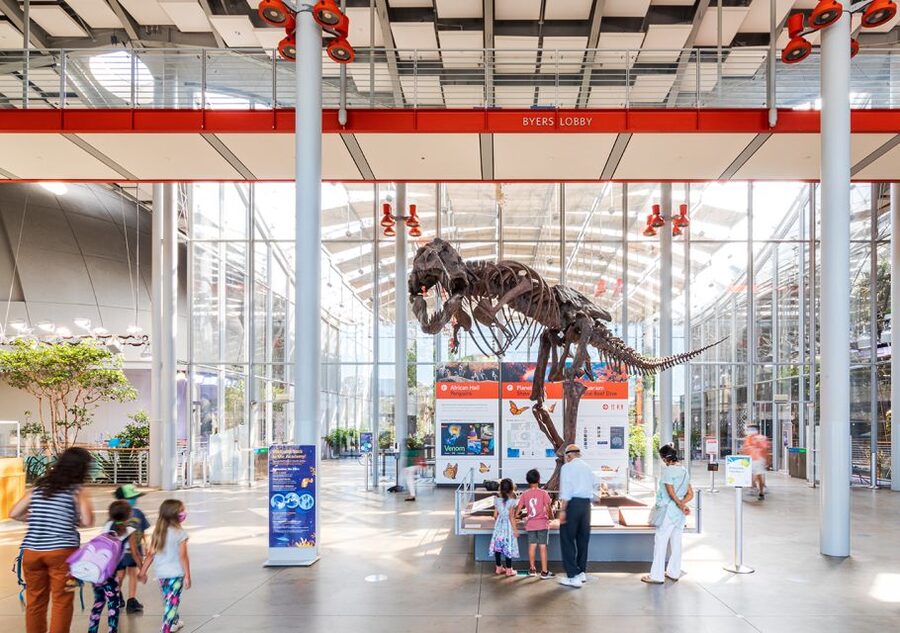
The California Academy of Sciences packs an aquarium, planetarium, rainforest, and natural history museum under one roof. That unusual mix means you can watch penguins waddle, stand among free-flying birds, study a living coral reef, and travel to the far reaches of space without changing attractions.
I love the nearly 60,000 live animals, especially the penguins and Claude the white alligator. I also like that one ticket covers the major exhibits and shows, making this a useful full-day choice when San Francisco fog or cold weather puts a dent in outdoor plans. The main catch is time: you may need four to five hours, and popular planetarium or rainforest time slots can fill up.
Key points at a glance
- Four major science experiences in one building: Aquarium, rainforest, planetarium, and natural history museum all come with general admission.
- Claude the white alligator: A memorable stop for children and adults, with turtle companions nearby.
- The Morrison Planetarium: Its 75-foot dome presents changing shows, but seating can fill before you arrive.
- A four-story rainforest: Look for free-flying birds, reptiles, amphibians, and other tropical life.
- Tiny Chef, Big Impact: A 20-minute planetarium film, props, photo opportunity, and mini-exhibit run from December 13 through spring 2026.
- Golden Gate Park setting: The museum’s 2.5-acre living roof and Wander Woods add outdoor space to the indoor visit.
Four attractions, one practical ticket
At $49 per person, this is not a quick museum stop. The price makes the most sense when you plan to stay for several hours and use the included shows and exhibits.
The Academy’s value comes from variety. A child who loses interest in one display may perk up at the penguins. An adult who is less interested in aquarium tanks may enjoy the planetarium or specimen cases. You can move between animals, astronomy, ecology, and natural history without paying separate admission for each section.
The ticket is valid for one day, and general entry includes all exhibits and shows, including the seasonal Tis the Season for Science program. That gives you room to slow down rather than race through every room.
Still, do not treat the Academy like a small stop between other Golden Gate Park sights. Several people have spent four or five hours inside and still missed parts of it. If you arrive at 1 p.m., you may have only until closing to see the main areas, depending on the day’s hours and show schedule.
More to weigh up across the USA
- NYC: SUMMIT One Vanderbilt Tickets
★ 4.7 · 51,195 reviews - NYC: 9/11 Memorial & Museum Timed-Entry Ticket
★ 4.8 · 31,428 reviews - NYC: Empire State Building Tickets – Observatory & Museum
★ 4.7 · 25,757 reviews
Start with the aquarium and living coral reef
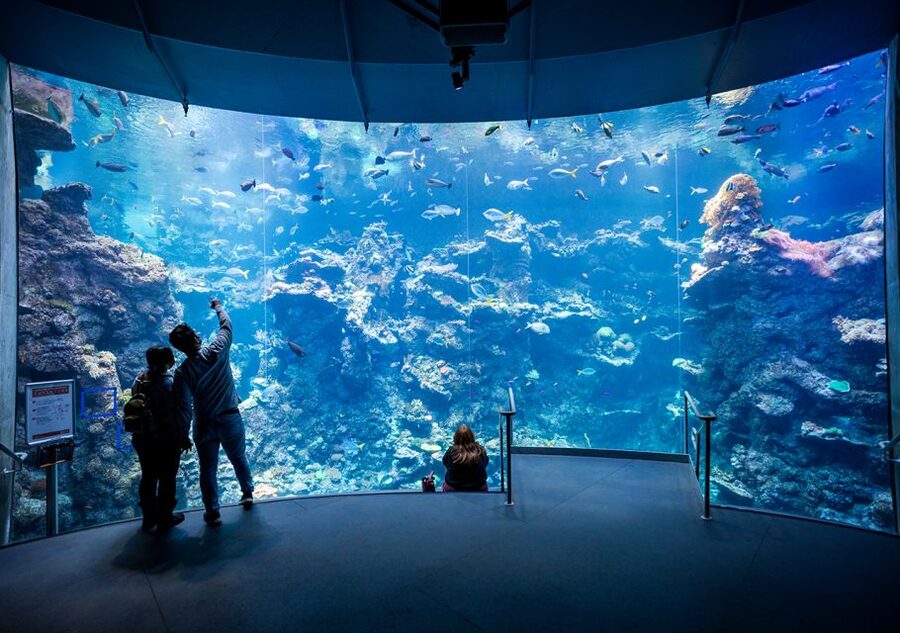
The aquarium is one of the Academy’s strongest sections. Its centerpiece is described as the world’s deepest living indoor coral reef, with marine life representing more than 1,000 species.
That scale matters because the aquarium is not simply a line of small tanks. You get a broad look at underwater life, with enough variety to hold attention for both younger children and adults. Take your time here if sea life is a main reason for your visit.
The aquarium also gives the Academy a useful rhythm. After the darker, more enclosed feeling of the planetarium, you can return to bright displays and moving water. For families, it offers plenty to see without requiring long stretches of reading.
Some exhibits may be crowded or temporarily unavailable during maintenance. One past visit found the rainforest closed, while another encountered missing or dirty displays. Conditions change, but it is sensible to check what is operating on your date, especially if one section is the chief reason you are buying admission.
Meet the penguins in African Hall
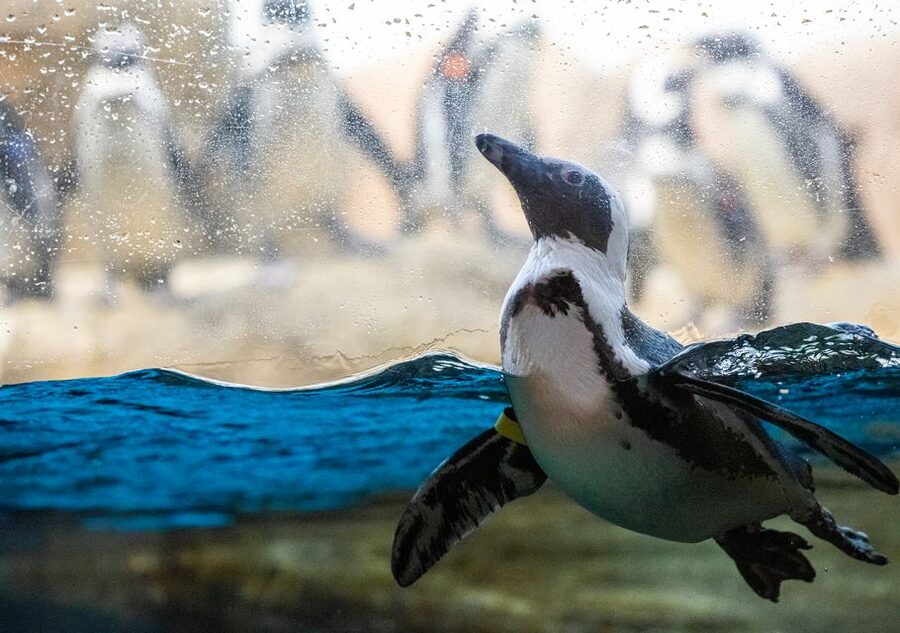
African Hall is home to a colony of playful penguins. Their movement gives this part of the museum a welcome burst of life. You can watch them swim, waddle, and gather near the viewing areas.
Feeding times are especially worth checking. A penguin feeding adds a scheduled event to your visit and can become one of the day’s best shared moments. It also helps children connect the animals with natural behavior rather than seeing them as static displays.
The Academy contains many specimens and exhibits, but the penguins are easy to remember. If you are visiting with children, I would make African Hall an early priority, then return later if the schedule allows.
Claude, the white alligator, is another favorite stop. His unusual coloring makes him easy to pick out, and he is shown with turtle companions. Claude is a good example of how the Academy mixes familiar animals with less expected subjects.
The four-story rainforest requires a plan
The rainforest is one of the building’s most distinctive experiences. It rises four stories and contains tropical plants and animals, including free-flying birds, exotic reptiles, and amphibians.
The design lets you look at life from several heights rather than viewing everything from one level. You might find birds moving overhead while reptiles and amphibians occupy lower displays. That vertical setup makes the forest feel different from a standard indoor animal exhibit.
The rainforest can also be one of the busiest areas. Lines have been long at times, and the section has closed for maintenance on previous dates. If it is operating when you arrive, check the entry process early rather than assuming you can walk in whenever you wish.
This is one place where patience pays off. Rushing through the line and exhibits can turn a special attraction into a quick glance. If your children are eager to see the rainforest, build it into your first circuit of the Academy.
A different kind of day, same corner of the map:
- NYC: Empire State Building Observation Deck Tickets
★ 4.7 · 22,072 reviews - NYC: Edge Observation Deck Admission Ticket
★ 4.6 · 20,918 reviews - Grand Canyon West, Hoover Dam Stop and Optional Lunch and Skywalk
★ 5.0 · 19,535 reviews - New York City: Statue of Liberty & Ellis Island with Ferry
★ 4.6 · 18,683 reviews
Let the Morrison Planetarium change the pace
The 75-foot Morrison Planetarium presents an immersive film about space, with different themes scheduled at different times during the day. The dome gives you a chance to sit down while the show carries you through the universe.
The planetarium is not automatically a guaranteed seat simply because it is included with admission. Time slots can sell out, so check the day’s schedule as soon as you enter and reserve a show if that option is available. Several people have missed it by waiting too long.
Children under four are not permitted inside the Planetarium. That rule matters for families with toddlers, since the rest of the Academy remains available but the planetarium cannot be part of their visit.
The planetarium works well as a mid-visit break. After walking through the aquarium and rainforest, you can sit in the dark and focus on the presentation. The theme changes, so check the current program instead of assuming every show covers the same subject.
Tiny Chef, Big Impact adds a special planetarium presentation beginning Saturday, December 13. The 20-minute film puts Tiny Chef on the Morrison Planetarium screen in a humorous story about how small actions can help the planet. The related exhibit includes Tiny Chef props, a photo opportunity, custom merchandise, and more, and is scheduled to remain on view through spring 2026.
Find fossils, specimens, and hands-on science
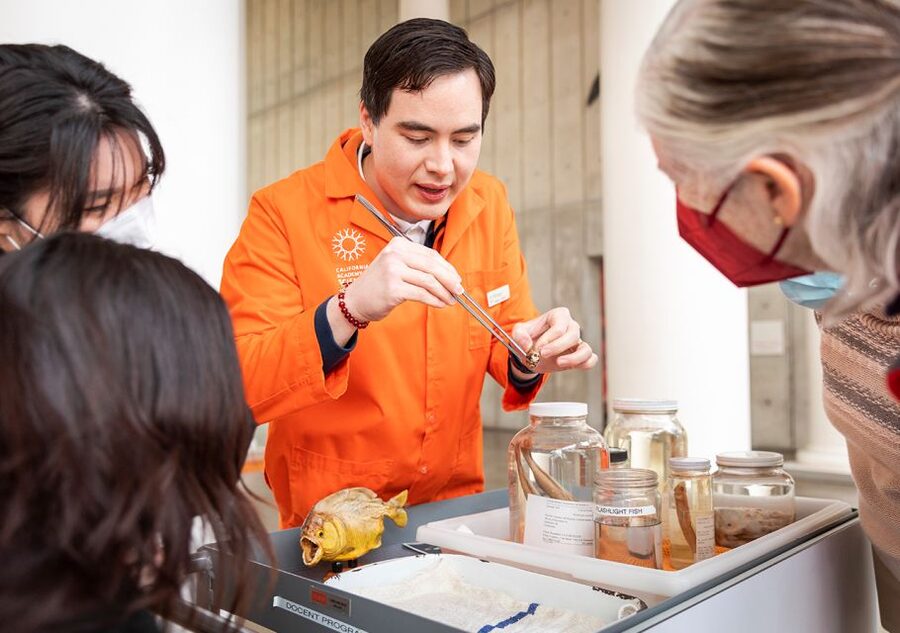
The natural history side of the Academy fills in the larger picture. You will find hundreds of specimens and hands-on activities in the Naturalist Center, with material aimed at children and adults.
This section rewards curiosity more than speed. Instead of watching animals move, you can examine specimens and take part in activities that ask you to look closely. It is a useful counterpoint to the showier aquarium and rainforest.
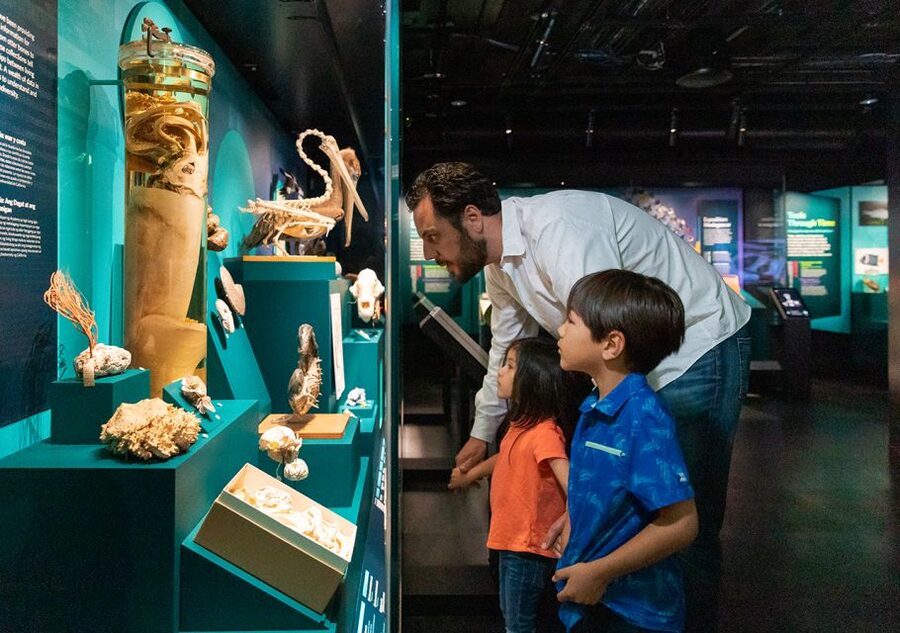
The Academy also presents its work as a research institute and natural history museum. Its collections include more than 46 million specimens, although you will not see all of them during a normal visit. What you do see gives you a window into the scale of scientific collecting and study.
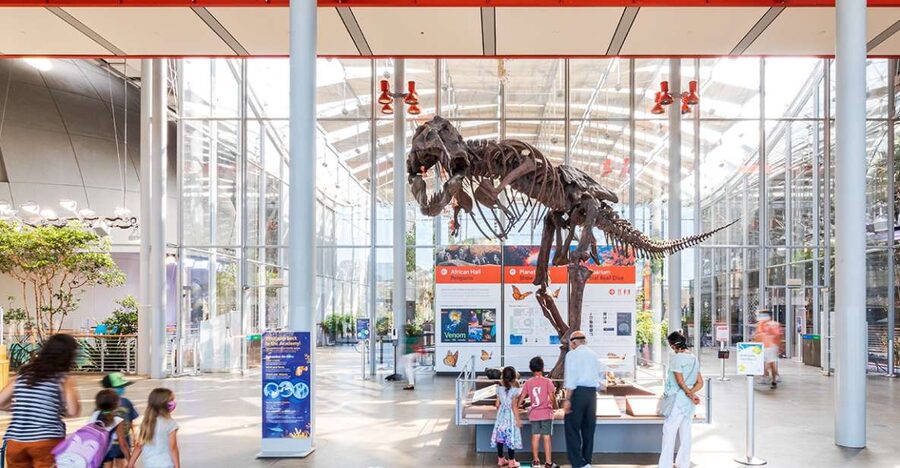
The displays cover subjects such as pinned insects, dinosaurs, animals, and the natural world. The dinosaur material can be a pleasant surprise if you arrive mainly for marine life or tropical animals.
Hands-on areas make this a good choice for mixed-age families. Older children can spend time with interactive material while younger ones move toward the animals. Adults who enjoy science can read more deeply without forcing every member of the group to follow the same pace.
Look up, then go outside
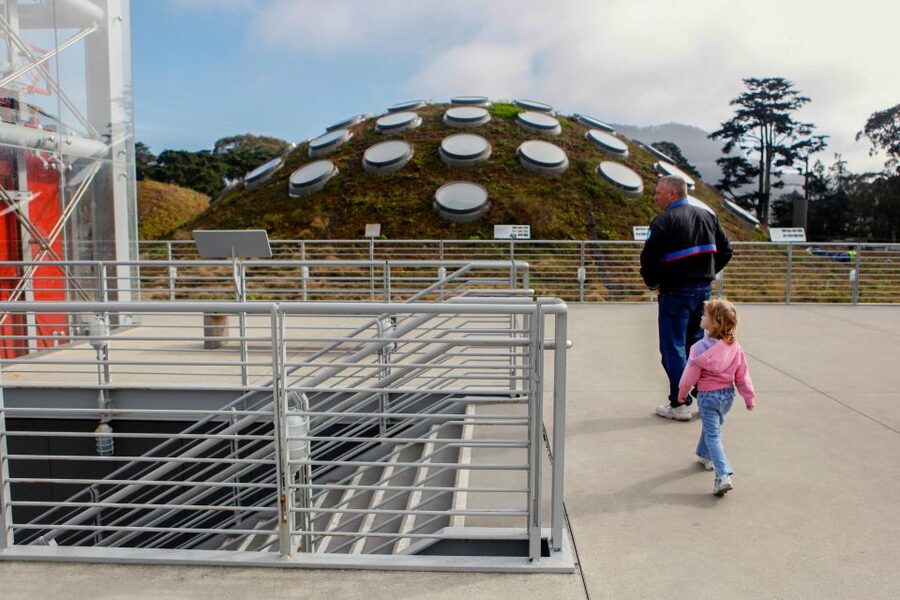
Do not leave without seeing the living roof. The Academy’s roof covers 2.5 acres and offers unusual views from above the building.
It is more than a photo stop. The roof connects the museum’s science lessons with the building itself, showing how a large public institution can include living systems in its design. You can also use it as a breather after the indoor galleries.
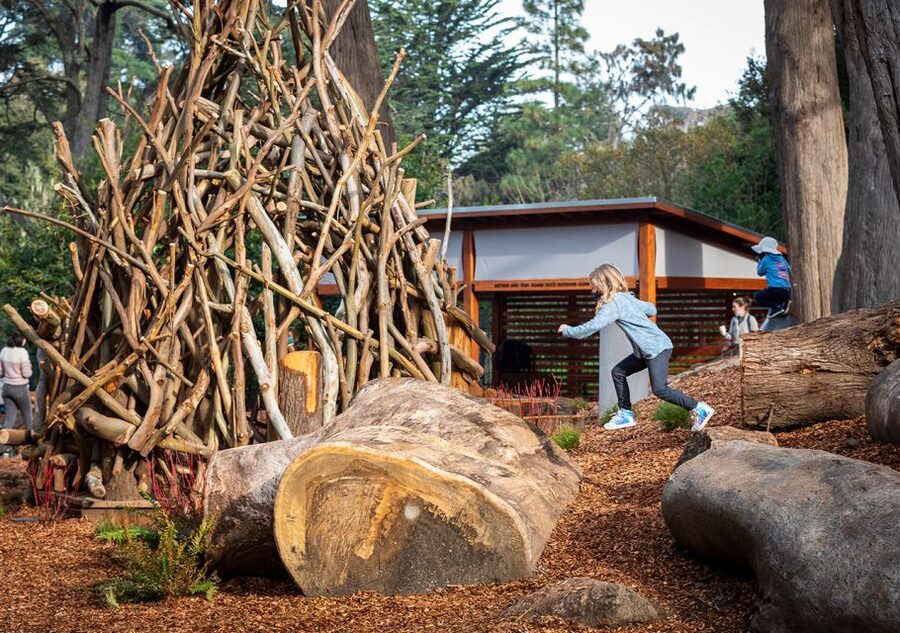
Wander Woods extends the visit outdoors with nature play and exploration space for children. This area helps release some energy after several hours inside, though your child’s access and interest will depend on current conditions and the day’s schedule.
The Golden Gate Park location adds value. The Academy sits at 55 Music Concourse Drive, so you can pair it with time in the park if your schedule allows. But do not assume you can arrive at the last minute by car. Finding parking has taken some visitors more than an hour, and the garage may be your best option when nearby spaces are full.
How long should you stay?
Give yourself at least half a day. Four to five hours is a sensible target if you want the aquarium, rainforest, penguins, planetarium, and natural history sections without rushing.
A full day is better for families who want feeding times, hands-on activities, a planetarium show, and breaks. The building has enough variety that you can stay interested even after the first major circuit.
Arriving early can help you see more before crowds build. It also gives you a better chance of arranging a planetarium time and checking whether the rainforest has a line.
If you have only two hours, choose your priorities before entering. The aquarium, penguins, and planetarium are natural choices, but you may have to skip the rainforest or Naturalist Center. A short visit can still work, but $49 feels harder to justify when you see only a portion of the building.
Food, crowds, and comfort
Food and drinks are not included. Plan for that extra cost, especially with children. Cafeteria prices can feel high, with one past purchase of fries costing $8.
Comfortable shoes are a good idea. The Academy involves substantial walking, and the amount of material makes it easy to spend longer inside than expected. Seating is available in some areas, including the planetarium, but this is still an active museum visit.
Crowds vary. Some days are calm, while others bring long lines at the planetarium or rainforest. School groups and families can make the building noisy, particularly during busy periods.
The Academy is wheelchair accessible. Staff assistance is available, though service may not always feel consistent. If you need a particular seating arrangement in the planetarium, ask clearly at the entrance and allow extra time for staff to direct you.
The mobile ticket is designed for direct entry, and the experience includes skip-the-ticket-line access. Have the ticket ready on your phone before you reach the entrance at 55 Music Concourse Drive. A past visitor had trouble with a mobile voucher and was sent to the regular line, so keep the app open and ask staff for help immediately if the scan does not work.
Who will get the most from this visit?
Families with children from about school age through the teenage years have the most obvious reason to book. The animals provide an immediate hook, while the specimens, planetarium, and hands-on areas add enough substance for older children.
It also suits adults who enjoy science museums. The planetarium, aquarium, architecture, and natural history collections can fill an afternoon without needing children in tow. The Academy even holds late-night programming on some Thursdays, which can make a fun date-night option for people who enjoy science.
This is a smart rainy or foggy-day plan because most of the visit takes place indoors. It also works for mixed groups, since not everyone needs to like the same subject.
You may want to skip it if you dislike animals in enclosed displays or if you prefer a small, quiet museum. It can be crowded, and some sections rely on glass viewing areas. Also reconsider the purchase if you have only a short window and cannot reserve a desired planetarium show.
Is the $49 ticket good value?
For a quick visit, $49 is a steep price. For four or five hours covering an aquarium, rainforest, planetarium, natural history museum, outdoor roof, and children’s nature space, the value is much stronger.
The ticket is particularly useful when a group has different interests. One person can focus on penguins and marine life, another can study specimens, and everyone can share the planetarium and rainforest.
Food costs are separate, and parking may add another expense. If you are driving, plan ahead. If the planetarium is a must, check its availability before you commit your day to the museum.
The strongest value comes from treating this as a main San Francisco activity, not a brief add-on. You are paying for range and time, so use both.
Should you book the California Academy of Sciences?
Book it if you want one indoor attraction that covers animals, astronomy, ecology, and natural history. I would especially recommend it for families, science-minded adults, and anyone looking for a flexible Golden Gate Park plan on a cold or foggy day.
Arrive early, wear comfortable shoes, check planetarium and rainforest availability, and allow at least four hours. The Academy is worth the $49 when you give it enough time. If you can spare only an hour or two, choose a smaller attraction or save this one for a day when you can take it at a slower pace.
You can cancel up to 24 hours in advance for a full refund, and reserve now while paying later if you need to keep your plans flexible.
FAQ
Where is the California Academy of Sciences?
It is at 55 Music Concourse Drive inside Golden Gate Park in San Francisco, California.
What does the general entry ticket include?
The ticket includes general entry, all exhibits, and all shows, including Tis the Season for Science.
How long is the ticket valid?
The ticket is valid for one day.
Are food and drinks included?
No. Food and drinks are not included in the admission ticket.
Can children under four enter the planetarium?
No. Children under four are not permitted inside the Planetarium.
Is the Academy wheelchair accessible?
Yes. The California Academy of Sciences is wheelchair accessible.
Newly listed in the USA
- The Maui Butterfly Farm Tour★ 5.0 · 446 reviews
- NON BUS 4 Winery Traverse City Wine Tour on Old Mission Peninsula★ 5.0 · 445 reviews
- New England Aquarium Admission Ticket in Boston★ 4.0 · 446 reviews
- New Orleans City Tour and Steamboat Natchez Harbor Jazz Cruise★ 4.0 · 446 reviews
- Alpaca and Llama Farm Tour★ 5.0 · 446 reviews
- Small-Group Laura and Whitney Plantation Tour from New Orleans★ 4.5 · 446 reviews
- Dreaded Dead Descent of the District: DC Ghost Tour★ 4.0 · 446 reviews
- Cañon City: Royal Gorge Bridge & Park Entry Ticket & Gondola★ 4.5 · 448 reviews